


Guidance (hidayah) and Happiness
Praise and gratitude must be given to the Supreme Creator; He has created us as human beings. In the universe, only one creature, namely man, possesses a quality from which Allah has breathed of His spirit. As soon as all human beings are born, a spirit is breathed into them by the Creator. In addition to the physical body and the soul (nafs), the human being is equipped with this divine Trust. The spirit of Allah is a great blessing bestowed only upon human beings.
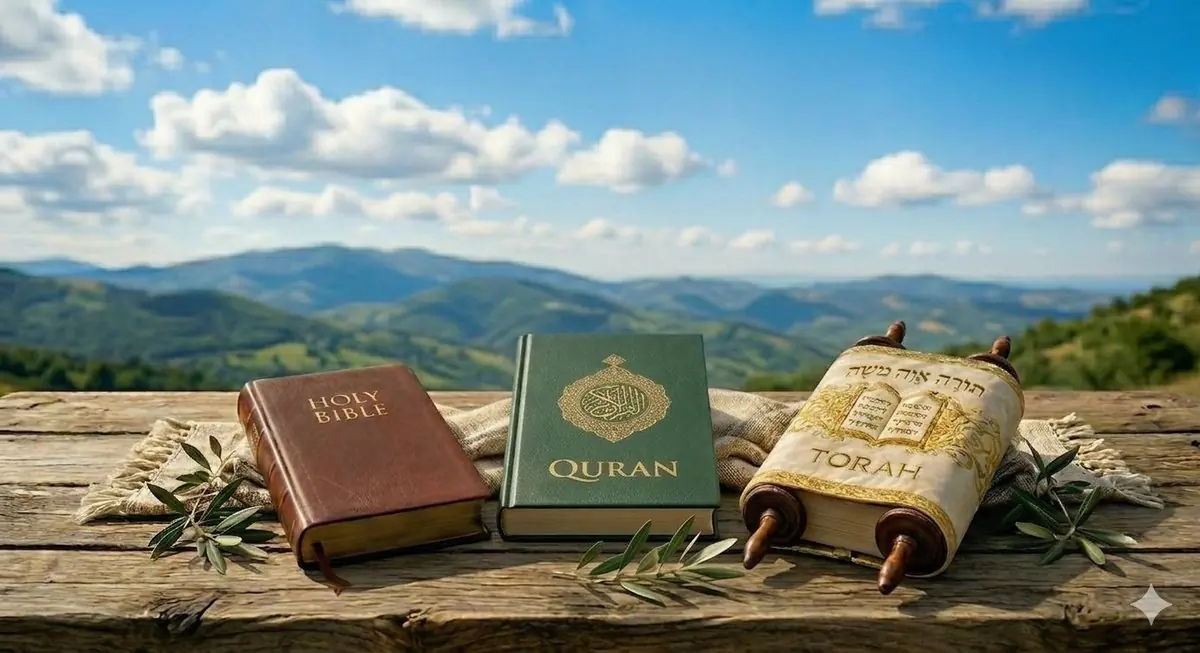
When the content of divine relationships is examined, it is seen that this process consists of surrenders. Through the Torah, the Gospel, and the Holy Qur'ân, it has been made obligatory for all human beings to surrender their spirits, their faces (vech), their souls (nafs), and their wills to Allah.
Relationships with Allah and the 7 Stages
The process of spiritual evolution between man and the Creator consists of 7 stages, and 4 of these stages involve surrender.
The beginning of this process is as follows:
Stage 1: To wish to reach Allah.
Stage 2: Following a spiritual guide (murshid).
The spiritual state that occurs when following a spiritual guide (murshid) is as follows: The spirit leaves the body to reach Allah. If a person has reached a true spiritual guide (murshid) by performing the special prayer of need (salaat al-hajat) and consulting Allah, the spirit definitely leaves the body and joins the caravan (sayr wa suluk) that has set out towards Allah.
This caravan of spirits performs a spiritual journey by transcending the 7 heavenly floors. This process covers a period of approximately 7-8 months. On the 7th heavenly floor, 7 realms are passed, and finally, the Essence of Allah is reached through a vertical journey from the Sidrat al-Muntaha.
The Creator asks for the spirit He breathed back. The fundamental feature that distinguishes man from other creatures is that a spirit is breathed into him the moment he is born. All human beings are created with an identity capable of bearing this Trust. It is the primary duty of all human beings to set the spirit, which is a Trust, on the path towards the Creator. This phenomenon requires absolute obedience to a spiritual guide (murshid).
The Path to Paradise: To Wish to Reach Allah
It must be known that; unless one wishes to reach Allah, the path to paradise does not open to anyone.
The 1st Floor of Paradise includes those who wish to reach Allah. Subsequently, the person asks for their spiritual guide (murshid) from Allah through the special prayer of need (salaat al-hajat) and follows the spiritual guide (murshid) shown to them. This obedience prepares the ground for the spirit to leave the body.
The breathing of a spirit into a human by Allah and the return of the spirit are not the same process. A heartfelt wish is essential for the spirit to reach Allah. If a person sincerely wishes for Allah and to reach Him, Allah will definitely show that person their spiritual guide (murshid). The right of choice does not belong to the servant, but to Allah; a spiritual guide (murshid) suitable for everyone's temperament is appointed.
The Special Prayer of Need (salaat al-hajat) and Asking for a Spiritual Guide (murshid)
Arbitrary decisions are not valid on the spiritual path. Although the approach of "I will follow whoever I want" may be a personal preference, compliance with the divine command must be confirmed through the special prayer of need (salaat al-hajat). The commands of Allah must be applied exactly.
The Creator's command is clear: "You shall ask Me for your spiritual guide (murshid) by performing the special prayer of need (salaat al-hajat)."
Application of the Special Prayer of Need (salaat al-hajat):
Although nights connecting Thursday to Friday or holy nights are preferred, it can be performed every night after 12:00 by taking a full ablution.
- 1st Rak'ah: Subhanaka + Fatiha + 3 Ayatul Kursi
- 2nd Rak'ah: Fatiha + Ikhlas + Falaq + Nas
- Sitting: At-Tahiyyat
- 3rd Rak'ah: Fatiha + Ikhlas + Falaq + Nas
- 4th Rak'ah: Fatiha + Ikhlas + Falaq + Nas
- Final Sitting: At-Tahiyyat + Allahumma Salli + Allahumma Barik + Rabbana
In the prayer section following the prayer, the spiritual guide (murshid) is asked of Allah. The special prayer of need (salaat al-hajat) can be performed not only for this purpose but also for all kinds of spiritual and worldly needs.
Four Surrenders and Misconceptions
The thought "I am not worthy of this" is not valid; it is Allah who determines merit. The divine command is for everyone to reach their spirit to Allah. This is the Surrender of the Spirit. The process continues with the Surrender of the Physical Body, the Surrender of the Soul (nafs), and the Surrender of the Will. In total, there are 4 surrenders.
In past periods, these truths were forgotten, and the understanding of religion was reduced only to the "5 Pillars of Islam." According to a common but erroneous belief; it was claimed that those who perform their worship would first serve their sentences in hell and then enter paradise.
It must be importantly stated that; according to the Holy Qur'ân, there is absolutely no such concept as entering hell and then leaving it to go to paradise.
The Process After Wishing to Reach Allah
Allah the Almighty first takes the spirit in surrender. Then comes the surrender of the physical body. At the point where the spirit is surrendered, the heart of the soul (nafs) fills with light at a rate of 51%. In the following stages, the physical body is surrendered (80% light), the soul (nafs) is surrendered through continuous dhikr, and finally, the will is surrendered.
The easiest surrender is the surrender of the spirit; because the Creator has undertaken this duty Himself. The meaning of the relevant verse is as follows:
ASH-SHURA-13: Whoever wishes to reach Me, I will reach him to Myself.
Here, the expression "Whoever wishes to reach Allah" and the expression "Whoever wishes to surrender their spirit" point to the same truth. The spirit already belongs to Allah, and it is mandatory for it to return to Him. Salvation from hell has been tied to a condition that is unbelievably easy to believe, namely a sincere wish.
There is No Exit from Hell
If a person has spent their life without wishing to reach Allah, it is a great delusion to think that they will attain salvation only through formal worship. A person who enters hell will remain there forever. 64 verses in the Holy Qur'ân declare that it is impossible to exit hell.
What is Guidance (hidayah)?
In Qur'anic literature, the concept of guidance (hidayah) has unfortunately been mistranslated as "the right path" for a long time. However, guidance (hidayah) is the reaching of the human spirit to Allah before death. Two fundamental verses regarding the subject are as follows:
1st Reference:
ALI IMRAN-73: Innel huda hudallahi... (Verily, guidance (hidayah) is reaching Allah.)
2nd Reference:
AL-BAQARAH-120: inne hudallahi huvel huda... (Verily, reaching Allah, that is the guidance (hidayah).)
The definition of "Guidance (hidayah) is the right path" made in the interpretations of these verses has emptied the concept of its meaning. True guidance (hidayah) is the process of the surrender of the spirit, the face (vech), the soul (nafs), and the will to Allah.
The Peak of Happiness and 4 Surrenders
The separation of the spirit from the body is not a physical death, and the person does not feel this. Wishing to reach Allah brings the person to the 1st floor of paradise, and following a spiritual guide (murshid) brings them to the 2nd floor of paradise. With obedience to a spiritual guide (murshid) (2nd stage), the spirit leaves the body and reaches Allah through a 7-8 month spiritual journey. This is called "Attaining Guidance (hidayah)".
The levels of guidance (hidayah) are as follows:
- 1st Guidance (hidayah): Surrender of the spirit to Allah.
- 2nd Guidance (hidayah): Surrender of the physical body (face/vech).
- 3rd Guidance (hidayah): Surrender of the soul (nafs).
- 4th Guidance (hidayah): Surrender of the will.
Each of these stages brings with it a higher level of happiness. Wali (plural Evliya) means a saint of Allah (companion of Allah). As a human approaches Allah, their love turns into passion, and their passion turns into admiration.
Happiness is directly proportional to the cleansing (tezkiye) of the soul (nafs):
- One who surrenders their spirit: 51% Happiness.
- One who surrenders their physical body: 81% Happiness.
- One who surrenders their soul (nafs) and Will: 100% Happiness (Continuous dhikr).
Dhikr is the mechanism that cleanses the afflictions in the heart and ensures that inner qualities (attributes) (lights) take their place. There are no afflictions left in a heart that has reached continuous dhikr; it is filled with 100% light. This system is a divine design that carries man to the peak of happiness.
Frequently Asked Questions
1. How many stages do the spiritual relationships between man and Allah consist of?
Relationships between man and Allah consist of 7 stages. 4 of these are stages of surrender (Spirit, Face/Vech, soul (nafs), Will).
2. What is the absolute prerequisite for going to paradise?
Wishing to reach Allah (heartfelt demand) is the key to paradise. Without this wish, the path to paradise does not open. The 1st floor of paradise includes those who wish to reach Allah.
3. How is a true spiritual guide (murshid) found?
It should not be through personal preferences, but by performing the special prayer of need (salaat al-hajat) as required by Allah's command, and asking Allah for the spiritual guide (murshid). Allah shows the spiritual guide (murshid) to everyone who wishes sincerely.
4. When and how is the special prayer of need (salaat al-hajat) performed?
It is generally performed after 12:00 at night, by taking a full ablution, as 4 rak'ahs. In the prayer made after the prayer, the spiritual guide (murshid) is asked of Allah.
5. According to the Qur'ân, what is the true definition of the concept of "Guidance (hidayah)"?
As stated in the verses Al-Baqarah-120 and Ali Imran-73, guidance (hidayah) is not "the right path," but "the reaching of the human spirit to Allah before death."
6. Can a person who enters hell enter paradise after serving their sentence?
No, this is a common false belief. According to 64 verses in the Holy Qur'ân, a person who enters hell will remain there forever; there is no exit.
7. What does the concept of "4 Surrenders" cover?
It covers the surrender of the Spirit, the Face (Physical Body), the Soul (Nafs), and the Will to Allah, respectively. The easiest is the surrender of the spirit.
8. What does "Evliya" mean?
It is the plural of the word "Wali" and means "saints of Allah (companions of Allah)." A person who reaches their spirit to Allah becomes a wali (saint/companion) of Allah.
9. What is the relationship between happiness and dhikr?
As dhikr increases, the afflictions in the heart decrease, and the lights increase. In continuous dhikr, the heart fills with 100% light, and the person reaches 100% happiness.
10. Does a person die when the spirit leaves the body?
No, the departure of the spirit from the body to reach Allah (sayr wa suluk) is not physical death. The person does not feel this separation and continues their life.